
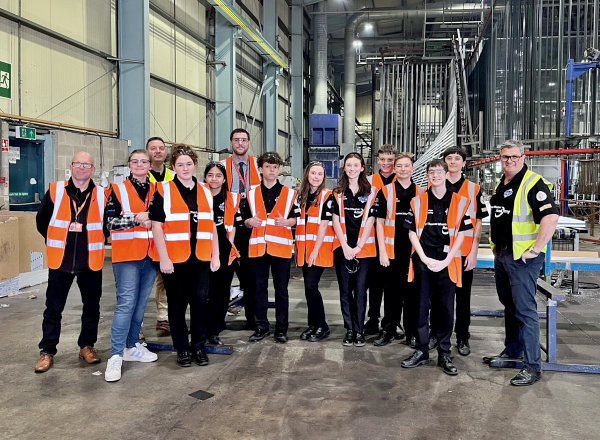
The government’s recent announcement on strengthening careers guidance and widening access to vocational and technical subjects at a younger age has brought welcome attention to an issue that many in the construction and manufacturing sectors have been raising for some time. Young people are making decisions about their futures at a point when many have had limited exposure to real workplaces and without really understanding the variety of roles available to them.
This renewed focus on early careers support is both timely and necessary as the skills gap is still widening despite demand on the construction sector rising across every part of the built environment. The UK needs more new homes, with housing delivery expected to accelerate under renewed government targets, and investment in education and healthcare facilities continues to grow as schools and hospitals require modern, energy‑efficient buildings. With more work in the pipeline and fewer skilled people available to deliver it, early engagement and clearer pathways into the construction and building products manufacturing sectors are vital.
But what does this look like in reality? In our view, we believe that the time to promote work in the construction and manufacturing sectors shouldn’t start at point of recruitment but much earlier, when curiosity is forming and young people are beginning to picture what their future might look like. That’s why we have long championed working closely with local schools and students to help young people see our industry in a more informed and accessible way.
How do we connect education with real industry?
That is the question! It would be naive to suggest there is a quick fix to the skills shortage or even a universal solution for all, but one initiative that is making a positive and practical difference is Better Learners Better Workers (BLBW), a long‑running Sheffield City Council initiative designed to give young people meaningful exposure to the world of work. It is delivered in partnership with local employers who provide workplace visits, mentoring and practical experiences that help students build confidence and develop essential employability skills and we are proud to have been involved with the scheme since 2024.
By creating a structured link between schools and real businesses, BLBW helps students understand the different roles available, what workplace expectations look like and how their own strengths could be put to good use.
Programmes like BLBW also highlight the need for employers to play an active role in shaping awareness and providing experiences that help young people make informed choices. Many companies could adopt a similar approach by opening their doors, sharing knowledge and engaging with local communities and there are numerous similar schemes in place across the UK.
Opening our doors to the next generation
In addition to our involvement in the Better Learners Better Workers programme we have also over the years regularly welcomed pupils from local primary schools into our manufacturing facilities, giving them the chance to see how aluminium fenestration systems are designed, produced and tested. These visits have always been about more than simply showing machinery or processes. They help children understand how buildings come together, how different skills contribute to the finished product and how modern manufacturing is shaped by technology, sustainability and collaboration.
This focus on offering practical support has continued through Senior’s long‑standing partnership with BLBW and the students who take part in the programme gain a genuine behind‑the‑scenes view. They meet people working from across our business including our production, technical and commercial teams and they begin to appreciate how varied the job opportunities within the sector can be. For many, it is the first time they have stepped inside a manufacturing facility, and the experience often changes their perception of what the industry looks like and where they might fit within it.
It’s a simple truth that without exposure to real environments, it is difficult for students to imagine themselves in technical or vocational jobs. If young people don’t have a full understanding of the variety of roles available, they may overlook opportunities that would suit their strengths and in turn, many positions will remain unfilled.
For our part, we are looking forward to welcoming our next BLBW cohort later in September and to continuing a partnership that has already helped many young people gain confidence, insight and practical experience.

Comments are closed.